The Archaeological Discovery Rewriting Bengal's Buddhist History
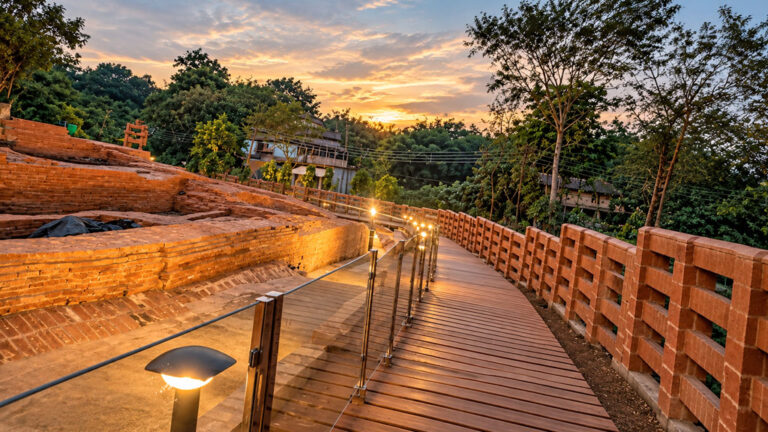
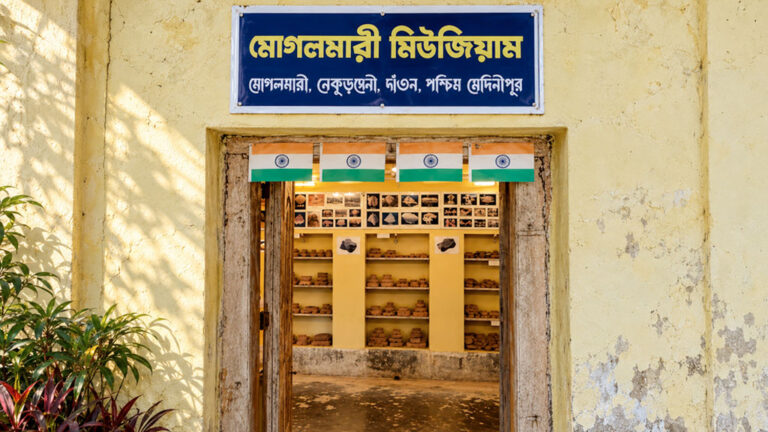
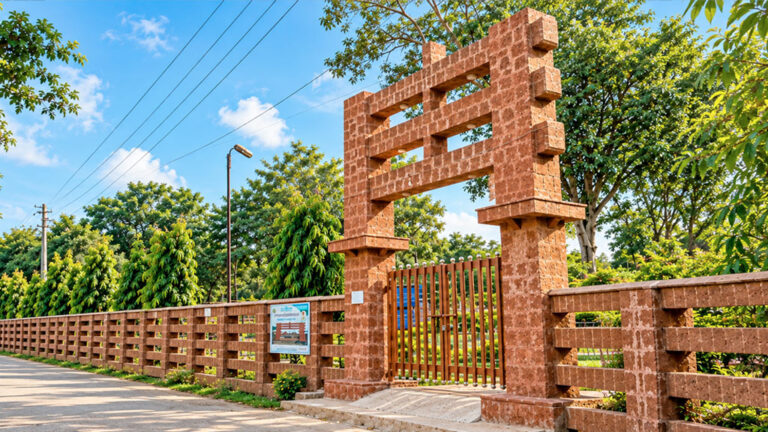
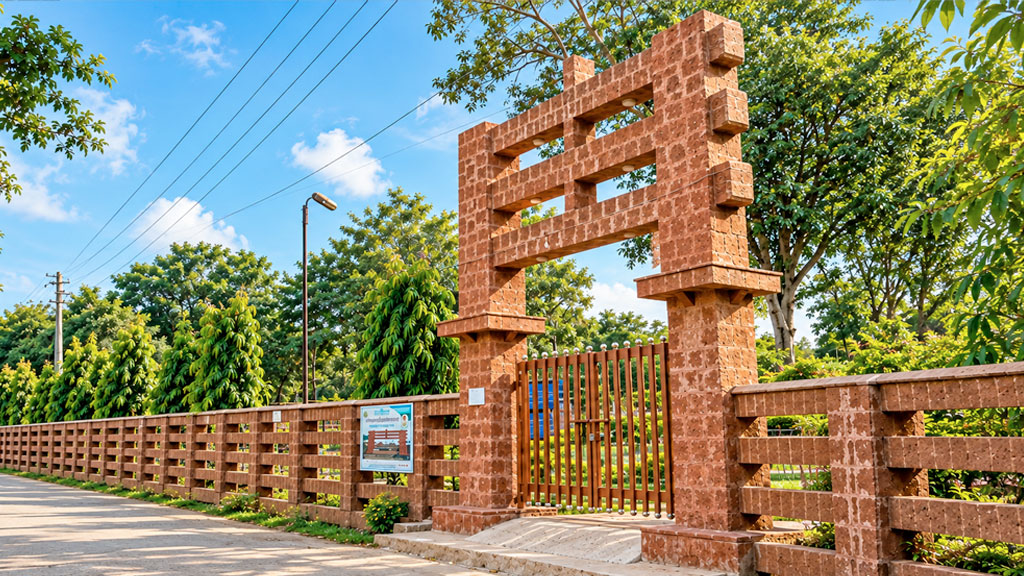
On the quiet left bank of the Subarnarekha River, near a small village called Mogalmari in West Bengal’s Paschim Medinipur district, archaeologists have spent two decades uncovering something remarkable: the largest Buddhist monastic complex ever found in the state. Not one monastery, but two, standing side by side – their walls still carrying stucco figures of the Buddha, their floors still holding seals, coins, and bronze images that had waited over a thousand years to be found.
This is not a legend dressed up as archaeology. It is archaeology that reads like a discovery story – and the facts alone are compelling enough that Mogalmari doesn’t need embellishment to matter.
How Mogalmari Came to Light
The site had been known locally for generations – villagers had turned up terracotta lamps, votive stupas, and inscribed tablets while working their fields, keeping many of these objects in their own homes. Serious investigation began in earnest when Dr. Asok Datta, then Head of the Department of Archaeology at Calcutta University, surveyed the area in the late 1990s. Systematic excavation followed from 2002-03 onward, continuing across multiple seasons (2003-04, 2006-07, 2007-08, and a further state-led excavation from November 2013), and the digging has continued intermittently since – most recently in January 2022, when a single day’s work near the site revealed more than 40 bronze artifacts dated to the 5th-6th century CE, timed to coincide with the annual Moghalmari Festival attended by Buddhist monks from across India.
What emerged, season after season, was too large and too structured to be a minor shrine. It was a full monastic institution – and, unusually, two of them, built within the same compound.
What the Excavations Actually Found
The evidence at Mogalmari is unusually rich for a Bengal Buddhist site, and it falls into a few clear categories.
The structures themselves. Excavation revealed a central temple structure with monastic cells arranged around a square courtyard, with a pradakshina (circumambulatory) path on the eastern and southern sides – standard monastic architecture built for ritual movement around a sacred core. The site shows two distinct construction phases: an earlier phase (6th-7th century CE) marked by extensive use of decorative stucco and ornamental brickwork, and a later phase (11th-12th century CE) represented by a tri-ratha brick stupa structure to the west. Archaeologists have catalogued dozens of different decorative brick types used in the outer walls – evidence of a building project executed with real architectural ambition, not a hurried or provincial effort.
The inscriptions and seals. Terracotta seals recovered from the site, bearing post-Gupta Brahmi script, were deciphered to reveal the names of two monasteries built within the same compound: Mugalayikaviharika and Yajñapindikamahavihara. The presence of two contemporaneous monasteries at a single site is, by the account of the excavating archaeologists, unique in eastern India. A separately recovered inscribed terracotta seal was assessed by the Indologist Prof. B. N. Mukherjee as belonging to a Buddhist religious tradition, with a paleographic date of roughly the 6th-7th century CE.
The artifacts. The finds include stone and bronze images of the Buddha and Bodhisattvas – including a stone Buddha image in the bhumisparsha (earth-touching) pose, recovered from a stratified excavation context, which the excavation team regarded as unambiguous confirmation of the site’s Buddhist character – along with terracotta tablets, pottery, medieval coins (including one bearing the name of a King Samachardeva), a gold pendant and part of a crown ornament, and the bronze figurines recovered in the 2022 dig. One excavation team member, Rajat Sanyal, has noted the presence of deities such as Jambhala and Saraswati within the structure, suggesting the site’s later use reflects the Vajrayana phase of Buddhism, when deity worship became part of Buddhist practice. Scholars studying the stucco and decorative work have also noted stylistic parallels with Nalanda in Bihar and with Raktamrittika Mahavihara in Bengal, pointing to a monastery connected – artistically and probably institutionally – to the wider monastic network of the Gupta and post-Gupta Ganga plains.
Taken together, this is a monastery complex that functioned, on current evidence, from roughly the 6th to the 12th century CE – a working religious institution for the better part of six hundred years.
The Xuanzang Question - What's Established and What Isn't
Any serious account of Mogalmari has to address one claim directly, because it is the one most often stated as fact and least often examined: that Mogalmari is the site described as “Dantapura” or a related location in the travel account of the Chinese Buddhist pilgrim-scholar Xuanzang (Hiuen Tsang), who journeyed through India in the 7th century CE.
Here is what can honestly be said. Some researchers and popular accounts have proposed this identification, and the site’s alternate name – “Dantapur Buddhist Monastery” – reflects that proposal. But this is a scholarly interpretation, not an archaeologically verified fact. Even writers closely familiar with the site’s excavation history note that archaeologists have not reached a concrete conclusion on the identification, despite the general chronology being consistent with it. Xuanzang’s travel account describes places using historical names and approximate geography that scholars have long debated when trying to map onto specific modern locations across eastern India – Mogalmari is one credible candidate among several possibilities discussed in that scholarship, not a settled identification.
MBA’s position on this is simple: Mogalmari’s importance does not depend on winning this debate. A monastery this large, this well-preserved, and this richly furnished with inscriptions and images is significant on the archaeological evidence alone. We present the Xuanzang connection as an open scholarly question worth watching – not as a closed case.
Mogalmari in Its Regional World
One of the most interesting threads to come out of the excavation reports is not about Mogalmari in isolation, but about Mogalmari in context. Excavators have noted that the monastic complex likely did not develop as an isolated institution – literary and archaeological evidence together point to a trade route, probably running close to the site, that connected the ancient port of Tamralipta (near present-day Tamluk) with Buddhist monastic centers across the Suvarnarekha River in Odisha, including Jayrampur, Basta, Khiching, Baleswar, and the Pushpagiri complex that includes Lalitgiri.
This matters because it reframes Mogalmari correctly: not as a lone outpost, but as one node in a working network of monasteries, trade routes, and river and coastal connections that linked Bengal’s ancient ports to Odisha’s Buddhist heartland – a heartland that itself connected further, by sea, to Southeast Asia’s Buddhist world. This is the honest historical logic behind treating Mogalmari as part of a wider Buddhist heritage landscape, rather than a promotional shortcut.
Why Mogalmari Matters Today
For scholars, Mogalmari is one of the most information-rich Buddhist excavation sites in Bengal – a place where inscriptions, seals, coins, and stratified artifacts allow real chronological and institutional analysis, rather than speculation.
For pilgrims and heritage travelers, it is a place to stand inside a working monastery’s footprint – its courtyard, its stupa base, its stucco walls – and to see, physically, how Buddhism lived and was practiced in Bengal for six centuries.
For West Bengal, it is proof that the state’s Buddhist past is not a footnote to Bihar’s and Odisha’s – it has its own major site, still being excavated, still yielding new finds as recently as 2022.
The Mogalmari Buddhist Association exists to see that this significance is communicated accurately – through the evidence that has already been found, and through the research still to come.
Sources consulted: excavation reports and academic papers by Prof. Asok Datta and the Mogalmari excavation team (The Asiatic Society, Kolkata); Rajat Sanyal’s excavation notes; B. N. Mukherjee’s epigraphic analysis; West Bengal State Archaeology documentation; and heritage reporting by Buddhistdoor Global and independent researchers. This article distinguishes archaeologically established findings from scholarly interpretation and unresolved debate throughout, per MBA’s evidence protocol.