
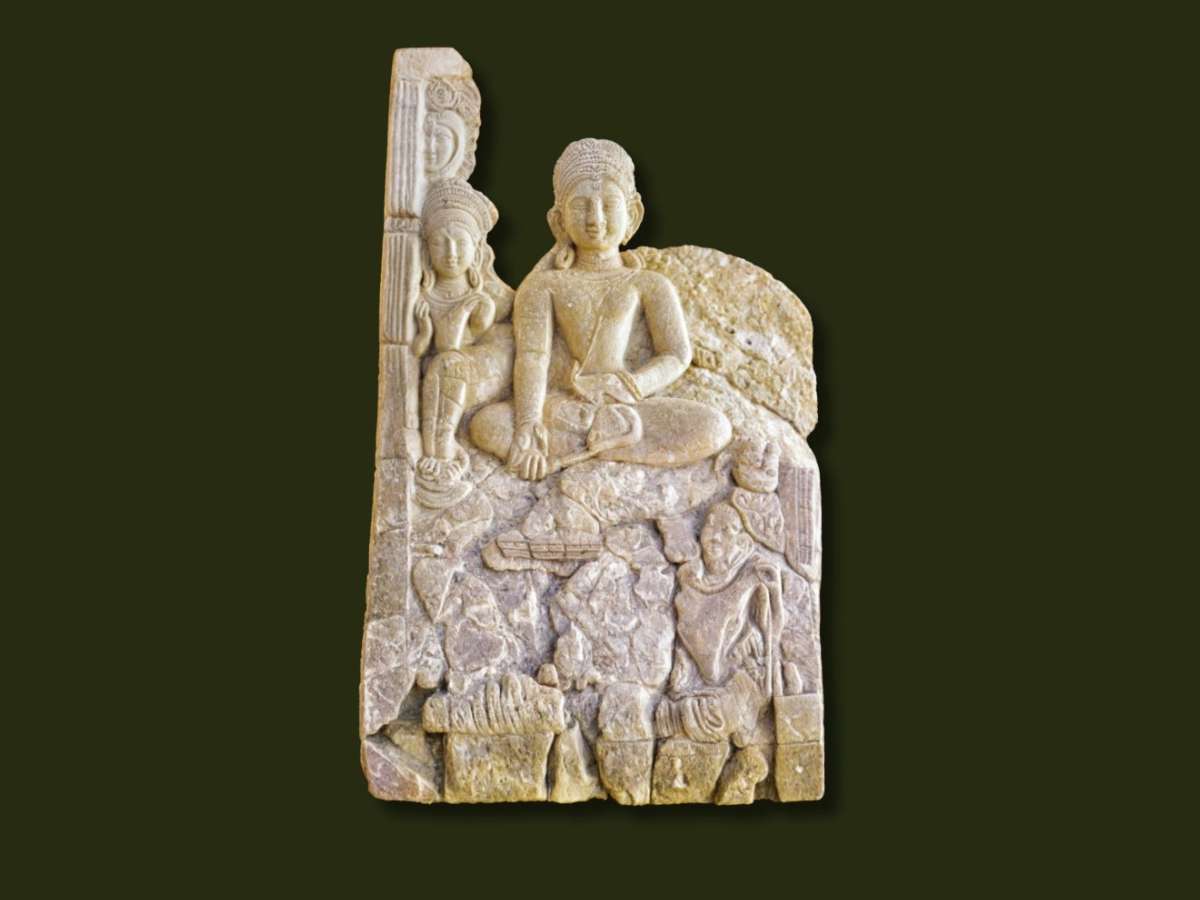
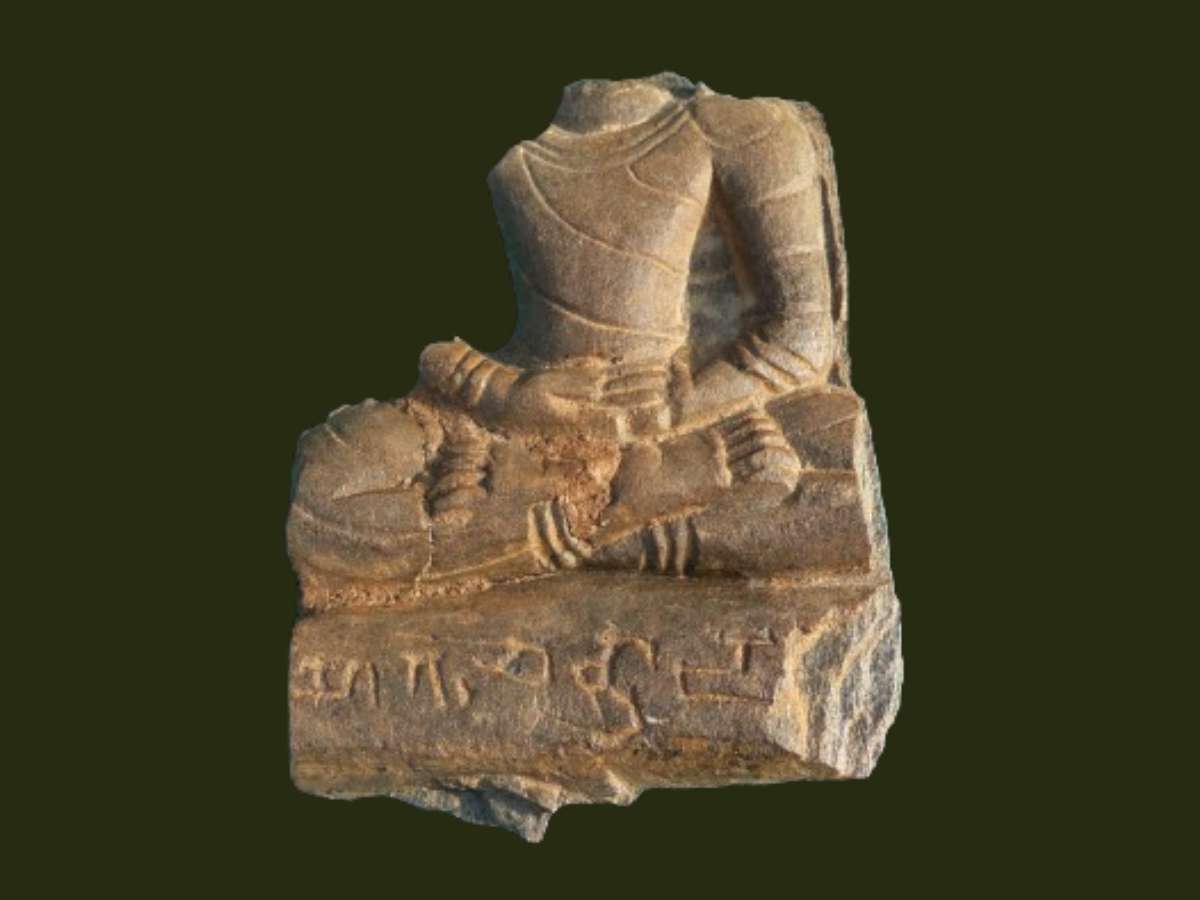
Mogalmari, located in the Tamralipta region of West Bengal, is one of the oldest Buddhist sites in Bengal, dating back to the Post-Mauryan period. The site gained prominence with the discovery of a 6th century Buddhist Monastery believed to be the oldest historical site in the state. Excavations revealed a Votive Stupa, seals, gold pendants, bronze images of Buddha, Bodhisattvas, and Buddhist goddesses totaling 95 bronze figures.
Historically, Tamralipta was a vital Buddhist center during Emperor Ashoka’s reign, from where his children Mahendra and Sanghamitra set sail to Ceylon to spread the Dhamma. Chinese travelers Fa-Hien and Hiuen Tsang documented Buddhist monasteries in the region, but only Mogalmari’s has been uncovered.
Today, Mogalmari stands as a significant spiritual and archaeological site. Its proximity to Kolkata makes it a promising destination for international Buddhist pilgrims. Events like the Buddhist Heritage Festival (2016) highlight its role in Buddhist revival. Mogalmari’s legacy continues to inspire a deeper connection to India’s spiritual roots.
Historically, Tamralipta was a vital Buddhist center during Emperor Ashoka’s reign, from where his children Mahendra and Sanghamitra set sail to Ceylon to spread the Dhamma. Chinese travelers Fa-Hien and Hiuen Tsang documented Buddhist monasteries in the region, but only Mogalmari’s has been uncovered.
Today, Mogalmari stands as a significant spiritual and archaeological site. Its proximity to Kolkata makes it a promising destination for international Buddhist pilgrims. Events like the Buddhist Heritage Festival (2016) highlight its role in Buddhist revival. Mogalmari’s legacy continues to inspire a deeper connection to India’s spiritual roots.
A Rising Star on the Buddhist Tourism Map
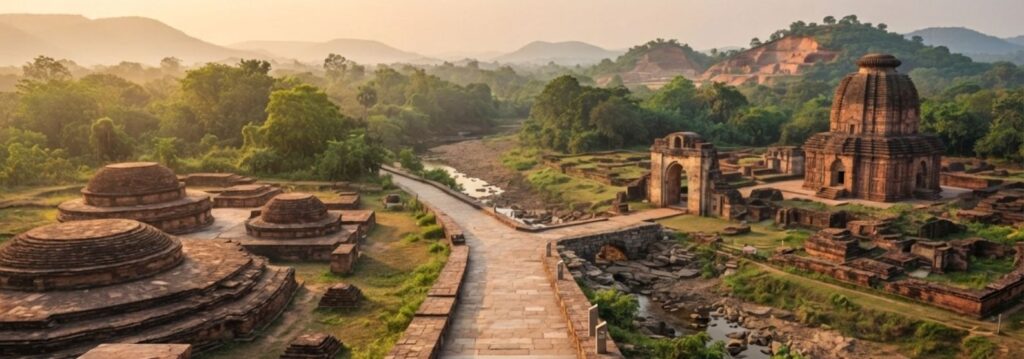
Mogalmari has great potential to attract Buddhist tourists, especially from Southeast Asia due to its proximity to Kolkata Airport. Integrating Mogalmari into a Buddhist Tour Circuit with Tamralipta and Dantapur can boost spiritual tourism. This circuit would include key sites in West Bengal and Odisha, like Udayagiri, Lalitgiri, Ratnagiri, and Pushpagiri.
Tamralipta
It is an ancient port city, was key in Ashoka’s era, sending his children to Ceylon to spread Buddhism.
Buddhist Stupa
A Buddhist Stupa symbolizes Buddha’s enlightened mind, housing relics or texts, and serves as a global site for meditation and pilgrimage.
Read MoreGold Pendant & Crown
From Mogalmari reflect ancient Buddhist artistry, symbolizing spiritual, royal significance in the 5th–6th century CE.
Tamralipta
Tamralipta
Buddhist Heritage Festival
The Buddhist Heritage Festival celebrates global Buddhist traditions, uniting monks and devotees to share teachings and preserve spiritual and cultural heritage.
A Historic Buddhist Site and Its Revival
Mogalmari, one of Bengal’s oldest Buddhist sites, is a vast Post-Mauryan settlement with a significant monastery, located in the Tamralipta region. It holds historical importance as the port through which Emperor Ashoka’s children, Mahendra and Sanghamitra, journeyed to Ceylon to spread Buddhism. Ancient travelers, like Fa-Hien and Hiuen Tsang, noted Tamralipta’s prominence with numerous monasteries and a Buddhist stupa. Although many monasteries remain undiscovered, the Mogalmari monastery was unearthed, revealing artifacts dating back to the 6th century CE.
- Archaeological Finds: Excavations revealed a Buddhist monastery, votive stupas, bronze images of Buddha, and a gold pendant, enhancing the site’s historical significance.
- Tourism Potential: Proximity to Kolkata’s airport makes Mogalmari an attractive destination for Buddhist pilgrims.
- Buddhist Tour Circuit: Developing a Tamralipta-Mogalmari-Dantapur circuit can increase tourism, connecting key Buddhist sites in Bengal and Odisha.
- Cultural Revival: The 2016 Buddhist Heritage Festival showcased Mogalmari’s role as a center of Buddhist learning, vital for cultural promotion.
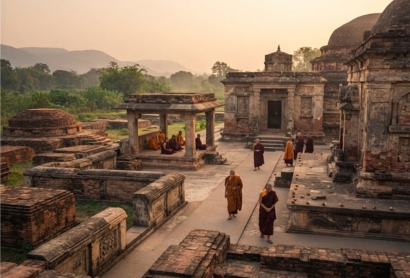
Buddhist Monastery
It is a place where monks and nuns live, meditate, and study Buddhist teachings. These sacred spaces are essential for the preservation and dissemination of Buddhist philosophy and practices.
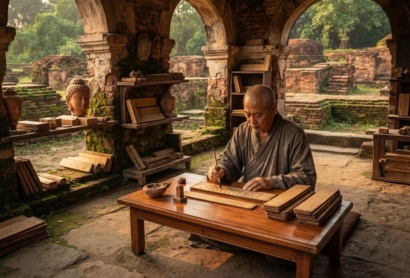
Fa-Hien
He was a Chinese Buddhist monk and traveler who journeyed to India in the early 5th century to study Buddhist scriptures. His detailed accounts of his travels, recorded in “Fo-ko-king,” provide valuable insights into ancient Indian culture and Buddhism.
The discovery of a 6th-century Buddhist Monastery at Mogalmari revealed the site’s deep historical roots in Bengal’s Buddhist heritage. Excavations unearthed votive stupas, seals, bronze Buddha images, and ornate stucco walls, marking Mogalmari as one of Bengal’s oldest Buddhist settlements. With 95 bronze images found—40 of which depict Buddha—the site highlights the spiritual and artistic richness of early Buddhism in the region.
Mogalmari’s strategic location near Kolkata’s international airport makes it highly accessible for global tourists, especially from Southeast Asia. With its strong historic relevance and connection to Emperor Ashoka’s Tamralipta port, Mogalmari can be a key destination on the Buddhist pilgrimage circuit. Developing a Tamralipta-Mogalmari-Dantapur Buddhist Tour Circuit—including Odisha’s Udayagiri, Ratnagiri, and Lalitgiri—could significantly boost spiritual tourism and awareness of Eastern India’s Buddhist legacy.
The Mogalmari Buddhist Association plays a vital role in preserving the site’s legacy while promoting Buddhist teachings. With members from 14 countries and a partnership with Moscow, it encourages international collaboration, education, and cultural exchange. The association creates a supportive environment for meditation, study, and community service, welcoming individuals from all walks of life to build a peaceful society rooted in compassion and mindfulness.