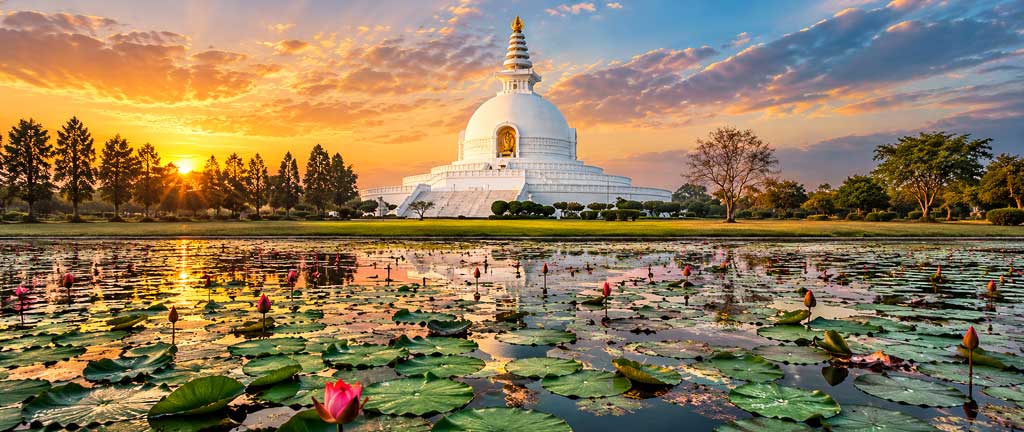
Walk the complete arc of the Buddha’s early life: birthplace to childhood palace to spiritual departure. This 3N/4D immersive pilgrimage centers on Lumbini (UNESCO World Heritage Site, birthplace of Siddhartha Gautama circa 563 BCE) and integrates Tilaurakot/Kapilavastu (29 km west), the ancient palace where Buddha spent his first 29 years of protected princely life before renouncing luxury to seek enlightenment. Combining direct engagement with Maya Devi Temple, Ashoka Pillar, Puskarini Sacred Pond, 30+ international Buddhist monasteries (Thai, Japanese, German, Chinese, Tibetan, Korean, Sri Lankan, Burmese, Vietnamese), the World Peace Pagoda, Lumbini Museum’s archaeological collections, plus Tilaurakot’s excavated palace complex, defensive walls, eastern departure gate, and Kapilavastu Museum, this itinerary offers comprehensive understanding of Buddha’s formative years and spiritual foundations. All experiences unfold across UNESCO-protected Sacred Garden, Monastic Zone, and companion Kapilavastu archaeological site, enabling continuous meditation practice and pilgrimage immersion. Perfect for Buddhist pilgrims beginning the four-site circuit (Lumbini-Bodh Gaya-Sarnath-Kushinagar), monastics, scholars, interfaith seekers, heritage explorers, and travelers honoring Buddha’s origins and renunciation narrative.
TOUR OVERVIEW
Total Duration: 3 nights, 4 days (approximately 96 hours)
Starting Point: Lumbini hotel or Bhairahawa airport/railway (40-50 km away) or Kathmandu (300 km, 8-10 hours)
Ending Point: Lumbini hotel, Bhairahawa, or Kathmandu airport/railway
Accommodation: Lumbini Sacred Garden or New Lumbini Village (Nights 1-2); Tilaurakot/Kapilavastu region or return to Lumbini (Night 3); options include Buddha Pilgrim Centre, Maya Devi Guest House, Lumbini Village Resort, Kapilavastu Museum Guest House, or comparable 3 to 4-star establishments
Key Sites:
- Lumbini: Maya Devi Temple, Ashoka Pillar, Puskarini Sacred Pond, 30+ International Monasteries, World Peace Pagoda, Lumbini Museum, Monastic Zone (East and West)
- Kapilavastu/Tilaurakot: Tilaurakot Palace Complex, Eastern Departure Gate, Kapilavastu Museum, Samai Mai Temple, Archaeological excavations, monastery ruins
Journey Distance: Lumbini Sacred Garden and Monastic Zone (2.56 square km, walking/cycling); Lumbini to Tilaurakot (29 km, approximately 1.5 hours vehicle transfer); minimal transit, maximum immersion
Best For: Buddhist pilgrims, monks and monastic delegations, scholars, interfaith practitioners, spiritual seekers completing early-life Buddha narrative, heritage explorers, archaeology enthusiasts, contemplative retreatants, educational groups
Unique Value: UNESCO World Heritage Site plus companion archaeology site; complete Buddha early-life narrative; Ashoka Pillar historical verification; 30+ international monastery expressions; palace archaeology connecting Buddha’s luxury renunciation; integrated multi-site spiritual arc
CONTEXTUAL FRAMEWORK: THE BUDDHA'S EARLY LIFE ARC AND DUAL-SITE SIGNIFICANCE
Understanding the Buddha’s formative years and the significance of both Lumbini (birthplace) and Kapilavastu (childhood palace) illuminates this 3N/4D pilgrimage’s unique depth.
Siddhartha Gautama’s Life Arc: Birth Through Renunciation
Buddhist texts and historical records document the Buddha’s early life arc across these three phases:
Phase 1: Birth at Lumbini (approximately 563 BCE)
According to Buddhist tradition and Ashoka’s 3rd century BCE pillar inscription, Prince Siddhartha was born in Lumbini Garden, maintained by King Suddhodana of the Shakya kingdom for his wife Queen Maya Devi. The birth narrative describes auspicious signs, immediate spiritual capacity (taking seven steps, lotus flowers blooming), and immediate recognition of extraordinary destiny.
Historically and archaeologically: Birth location verified by Ashoka’s pillar (earliest written confirmation), excavated temple layers dating to pre-Mauryan era, continuous pilgrimage veneration for 2,500+ years, and recent international archaeological verification (2013 team discovered pre-shrine remains).
Phase 2: Childhood and Youth at Kapilavastu (ages 0-29)
Following his birth, Siddhartha was transported to Kapilavastu (modern Tilaurakot), the capital city of the Shakya kingdom. King Suddhodana, upon learning from an astrologer that his son would become either a great king or a great spiritual teacher, resolved to prevent the spiritual path. He enclosed his son in palatial luxury:
- Palace Compound: Tilaurakot excavations reveal large residential complex enclosed by 10-12 foot defensive walls and moat
- Protected Isolation: Three palaces (for seasons) with gardens, attendants, entertainment, and every luxury
- Restricted Movement: Walls preventing exposure to suffering, sickness, death, or spiritual knowledge
- Privilege and Pleasure: Twenty-nine years of uninterrupted comfort, martial training, and preparation for kingship
- Marriage and Family: Siddhartha married Yashodhara (cousin); son Rahula born; all within palace walls
Spiritual Significance: The Buddha’s childhood in luxury teaches a fundamental Buddhist principle: enlightenment does not require ascetic extremism or denial of beauty. Rather, wisdom emerges from balanced understanding and conscious renunciation, not from deprivation or self-harm.
Phase 3: The Four Sights and Departure (age 29)
At age 29, despite his father’s protective measures, Siddhartha encountered the “Four Sights”: an elderly person (aging), a sick person (illness), a corpse (death), and an ascetic wanderer (spiritual seeker). These encounters awakened him to universal human suffering and the inadequacy of palatial luxury in addressing fundamental existential questions.
That night, Siddhartha renounced his princely life. He left through Kapilavastu’s eastern gate (still visible at Tilaurakot), departing his sleeping wife and child, his palace, his kingdom—all comforts and duties—to pursue enlightenment.
Historical and Spiritual Teaching: This renunciation is not portrayed as abandonment or failure, but as the most significant decision in human spiritual history. The Buddha’s departure teaches that true fulfillment transcends sensory pleasure and worldly achievement; ultimate liberation requires conscious sacrifice of conditioned comforts.
Archaeological Significance of Tilaurakot/Kapilavastu
Tilaurakot, located 29 km west of Lumbini, has been identified by archaeologists as the historical site of ancient Kapilavastu. Key archaeological evidence:
- Palace Complex Remains: Excavated foundations revealing large residential compound, gardens, ponds, roads, and fortifications
- Historical Dating: Major civic center approximately 9th century BCE to 3rd century CE (contemporary with Mauryan Empire under Ashoka)
- Defensive Architecture: 10-12 foot wide defensive walls and deep, wide moat encircling palace complex, indicating royal fortification
- Ongoing Excavations: Continuous archaeological work revealing palace structures, temples, coins, pottery, terracotta figurines, and administrative artifacts
- Museum Collections: Kapilavastu Museum displays objects discovered during excavations, providing material evidence of ancient settlement
- Eastern Gate: Location of the historical gate through which Prince Siddhartha departed at age 29, initiating his spiritual quest
- Samai Mai Temple: Small Hindu shrine on ancient site, indicating religious continuity and sanctity across millennia
Pilgrimage Significance: Visiting Tilaurakot allows contemporary pilgrims to stand in the exact locations where Buddha spent 29 years, to walk the path toward the eastern gate, and to contemplate the tension between worldly pleasure and spiritual aspiration—a fundamental theme in Buddhist teaching.
Dual-Site Pilgrimage Philosophy
By visiting both Lumbini (birthplace) and Kapilavastu/Tilaurakot (childhood palace), pilgrims experience the complete arc of the Buddha’s formative life:
- Lumbini: Sacred origins, cosmic birth, Buddha-nature entering history
- Kapilavastu: Worldly conditioning, protective isolation, luxury and comfort
- Eastern Gate: Conscious renunciation, choice for spiritual truth over conditioned pleasure
- Subsequent Journey: Departure toward enlightenment (Bodh Gaya), teaching (Sarnath), and final liberation (Kushinagar)
This narrative arc teaches Buddhism’s central insight: enlightenment is not escape from the world, but awakening within the world; not rejection of beauty, but non-attachment to pleasure; not hatred of palace life, but clarity that ultimate fulfillment transcends temporary comfort.
DAY TRIP ITINERARY
DAY 1: ARRIVAL IN LUMBINI AND MAYA DEVI TEMPLE SACRED NATIVITY ENGAGEMENT
Flexible Arrival (Timing Options)
Arrive at Lumbini by one of the following routes:
Option A: Flight to Bhairahawa + Taxi Transfer
- Fly Kathmandu to Bhairahawa Airport (Gautam Buddha International Airport): approximately 35 minutes
- Taxi transfer Bhairahawa to Lumbini: approximately 40-50 minutes (NPR 800-1,500)
Option B: Tourist Bus Kathmandu to Lumbini
- Overnight or daytime AC tourist bus (8-10 hours, NPR 1,500-2,500)
- Depart Kathmandu early morning or evening
Option C: Private Vehicle from Kathmandu
- Private jeep/taxi (NPR 12,000-15,000; 8-10 hours)
Option D: Travel from Pokhara or Chitwan
- Tourist bus from Pokhara (6-9 hours) or Chitwan (5-6 hours)
Hotel Check-In and Orientation
Check into pre-booked pilgrimage center or heritage hotel in Lumbini Sacred Garden or New Lumbini Village (Buddha Pilgrim Centre, Maya Devi Guest House, Lumbini Village Resort, or comparable 3-4 star property).
AFTERNOON/EVENING: MAYA DEVI TEMPLE AND SACRED GARDEN INITIAL PILGRIMAGE IMMERSION (3:00 PM to 7:00 PM)
Same comprehensive engagement as 2N/3D itinerary (see DAY 1 section of 2N/3D version above for full details)
Summary of Day 1 Activities:
- Initial Approach and Atmospheric Presence (20 minutes)
- Inner Sanctum Encounter with Marker Stone (40-50 minutes)
- Nativity Sculpture and Artistic Engagement (20 minutes)
- Archaeological Layers and Historical Connection (20 minutes)
- Ashoka Pillar Meditation and Inscription Study (30-40 minutes)
- Puskarini Sacred Pond: Purification and Ritual Reflection (30-40 minutes)
- Return to Hotel and Evening Integration (6:00 PM to 9:00 PM)
Overnight Stay: Lumbini Sacred Garden Pilgrimage Centre (Night 1)
DAY 2: COMPREHENSIVE LUMBINI MONASTIC ZONE CIRCUIT – INTERNATIONAL MONASTERIES AND STUPAS
Pre-Dawn Meditation and Early Practice (Optional but Encouraged)
Rise early (5:00 AM to 7:00 AM). Walk to Maya Devi Temple for pre-dawn meditation. Experience profound quietude of early morning. Return to hotel by 7:30 AM.
Breakfast and Day 2 Orientation (7:30 AM to 8:30 AM)
Substantial breakfast at hotel. Detailed briefing from guide on Day 2 comprehensive circuit: 30+ international monasteries across East (Theravada) and West (Mahayana/Vajrayana) Monastic Zones. Etiquette, photography protocols, meditation opportunities.
FULL-DAY LUMBINI MONASTIC ZONE CIRCUIT (8:30 AM to 5:30 PM)
Same comprehensive engagement as 2N/3D itinerary (see DAY 2 section of 2N/3D version above for full details)
Summary of Day 2 Activities:
Station 1: World Peace Pagoda and Northern Monastic Complex (9:00 AM to 10:30 AM)
- Japanese peace monument, symbolic architecture, meditation engagement
Station 2: Theravada (East) Monastic Zone Circuit (10:45 AM to 1:00 PM)
- Thai, Sri Lankan, Myanmar, Lao, Cambodian monasteries
- Theravada Buddhist tradition exploration, meditation practice, architectural study
Lunch Break (1:00 PM to 2:00 PM)
- Pilgrim dining hall or local restaurant
Station 3: Mahayana / Vajrayana (West) Monastic Zone Circuit (2:00 PM to 5:00 PM)
- Japanese Zen, Chinese/Vietnamese, German/Western, Tibetan, Korean monasteries
- Mahayana/Vajrayana tradition exploration, iconography study, meditation practice
Return to Hotel and Evening Leisure (5:00 PM to 9:00 PM)
Optional evening activity: Return to Maya Devi Temple for sunset meditation, or rest and integration.
Overnight Stay: Lumbini Sacred Garden Pilgrimage Centre (Night 2)
DAY 3: TILAURAKOT/KAPILAVASTU FULL-DAY ARCHAEOLOGICAL AND SPIRITUAL PILGRIMAGE
Early Breakfast and Departure from Lumbini (7:00 AM to 7:30 AM)
Early breakfast at hotel. Prepare for 29 km day excursion westward to Tilaurakot/Kapilavastu. Vehicle departs hotel approximately 7:30 AM to 8:00 AM.
JOURNEY TO TILAURAKOT (Approximately 1.5 hours, 29 km)
Drive westward from Lumbini through rural Kapilavastu District. Observe Nepali Terai agricultural landscape, local villages, religious shrines. Guide provides historical context and Buddha’s childhood narrative during journey.
Arrival at Tilaurakot/Kapilavastu Archaeological Site (Approximately 9:00 AM to 9:30 AM)
STATION 1: TILAURAKOT PALACE COMPLEX AND ARCHAEOLOGICAL EXPLORATION (9:30 AM to 12:00 PM)
Comprehensive engagement with ancient palace site; approximately 150 minutes
Tilaurakot Palace Complex: Historical and Archaeological Overview
Tilaurakot represents the archaeological remains of ancient Kapilavastu, capital of the Shakya kingdom where Prince Siddhartha spent his first 29 years. The site reveals:
Architectural Remains
- Palace Compound: Excavated foundations indicating large residential complex, estimated area and structure based on remains and historical texts
- Defensive Wall: 10-12 foot wide brick fortification wall encircling the palace, indicating royal security and status
- Moat System: Deep, wide moat surrounding the entire complex (visible in some excavated sections), providing additional fortification
- Interior Structures: Excavated remains of palace buildings, courtyards, gardens, and administrative structures
- Water Management: Ponds and wells indicating sophisticated water system for luxury and practical needs
- Elevation: Palace built on raised mound (approximately 10-15 meters elevation), strategic defensive positioning
Archaeological Evidence and Dating
- Historical Period: Major civic center approximately 9th century BCE to 3rd century CE
- Mauryan Era Artifacts: Coins, pottery, terracotta figurines from Ashoka’s time (3rd century BCE)
- Continuous Occupation: Multiple occupation layers indicating settlement and habitation across centuries
- Excavation Work: Ongoing archaeological work revealing new structures and artifacts
- Material Evidence: Grey ware pottery (9th-8th century BCE), Northern Black Polished Ware (6th-5th century BCE), Mauryan period coins, terracotta figurines
Pilgrimage Engagement in Palace Complex (approximately 120 minutes)
Eastern Gate and Departure Point (20 to 30 minutes)
- Walk to the eastern gate of the palace complex, marked by archaeologists
- This is the traditional location through which 29-year-old Prince Siddhartha departed his palatial life
- Stand at the gate and contemplate the historical moment: a prince renouncing kingdom, family, wealth, and comfort for spiritual truth
- Meditate on the teaching of renunciation (Pali: pabbajja): conscious choice to abandon conditioned comforts for liberation
- Reflect on the prince’s internal struggle: love for family and duty versus awakening to suffering and spiritual necessity
- Observe the view from the gate toward the fields where the Buddha took his first steps as a spiritual seeker
Palace Foundations and Interior Exploration (40 to 50 minutes)
- Walk through the excavated palace compound, observing brick foundations and structural remains
- Visit interior courtyards where the young prince lived, studied martial arts, and trained for kingship
- Observe wells and water systems indicating luxurious amenities and sophisticated engineering
- Imagine the palatial surroundings: three seasonal palaces, gardens, entertainment, and constant comfort
- Reflect on the paradox of the Buddha’s childhood: protected from suffering, yet ultimately awakening to universal suffering through direct encounter
Defensive Wall and Fortification Tour (20 to 30 minutes)
- Walk along the excavated portions of the defensive wall, observing construction techniques and dimensions
- Understand the wall’s purpose: protection of royal family and prevention of unauthorized entry/exit
- Reflect on the wall as metaphor: King Suddhodana’s attempt to wall off his son from spiritual knowledge and worldly suffering
- Contemplate how walls, walls, however strong, cannot ultimately prevent awakening to truth
Reflection in Meditation Space (20 minutes)
- Sit in a designated meditation area within or adjacent to the complex
- Contemplate the Buddha’s 29 years of protected isolation within these walls
- Reflect on the teaching of impermanence and the inadequacy of external protection against existential reality
- Consider the personal significance: What am I protecting myself from? What awakening am I resisting?
STATION 2: KAPILAVASTU MUSEUM (12:15 PM to 1:15 PM)
Adjacent to Tilaurakot Palace Complex
Museum Overview and Collections
Visit the Kapilavastu Museum, displaying artifacts discovered during ongoing excavations at Tilaurakot.
Museum Collections and Displays
- Pottery and Ceramics: Grey ware pottery (9th-8th century BCE), Northern Black Polished Ware (6th-5th century BCE), indicating settlement continuity across centuries
- Coins and Currency: Coins minted at Tilaurakot, Mauryan period coins from Ashoka’s era, indicating commercial activity and monetary systems
- Terracotta Figurines: Human and animal figurines, toys, decorative objects revealing daily life and artistic practices
- Stone and Metal Objects: Tools, weapons, jewelry, and functional items indicating technological development and craftsmanship
- Architectural Fragments: Bricks, structural remains, decorative elements revealing construction techniques
- Historical Panels: Informational displays on Tilaurakot’s archaeological history, excavation chronology, and scholarly interpretations
- Comparative Materials: Items from contemporary sites (Lumbini, other Shakya kingdom locations) showing regional cultural connections
- New Museum Construction: Note indicating expanded museum building under construction (ongoing since 2013)
Pilgrimage Engagement in Museum (approximately 60 minutes)
- Chronological Study: Begin with oldest pottery and materials, proceeding through time layers, understanding how civilization developed at Tilaurakot
- Material Connection: Handle or closely observe artifacts (per museum protocol) that were used by Buddha’s contemporaries, craftspeople, and family members
- Comparative Analysis: Compare Tilaurakot artifacts with those from Lumbini Museum (visited Day 4), understanding regional Buddhist culture connections
- Historical Imagination: Use artifacts to visualize daily life in palace: How did servants live? What were tools and crafts? What entertainment existed?
- Archaeological Methodology: Understand how stratigraphy (layered excavation) and artifact analysis help archaeologists date and understand past civilizations
- Reflection on Impermanence: Observe how civilizations rise, flourish, and eventually decline—a fundamental Buddhist teaching embodied in material remains
Lunch Break (1:15 PM to 2:00 PM)
Lunch at local restaurant near Tilaurakot (vegetarian Nepali meals available; guide arranges seating). Rest and water refill. Optional: Brief walk around museum grounds or adjacent village.
STATION 3: KUDAN (NYAGRODHARAMA) – BUDDHA’S FIRST MEETING WITH HIS FATHER (2:15 PM to 3:15 PM)
Located approximately 4.5 km south of Tilaurakot; approximately 15 to 20 minutes vehicle transfer
Kudan’s Historical and Spiritual Significance
Visit Kudan, identified as the ancient Nyagrodharama (banyan tree monastery), where Buddha is believed to have met his father King Suddhodana for the first time after his enlightenment and twelve years of wandering.
Historical Narrative
Buddhist texts describe that after attaining enlightenment at Bodh Gaya and traveling extensively as teacher, Buddha eventually returned toward his homeland. His father, King Suddhodana, upon learning that his son had become a buddha, traveled to meet him. The reunion occurred at Nyagrodharama (Kudan).
The text describes the emotional meeting: King Suddhodana, despite his initial grief at his son’s renunciation, witnessed Buddha’s spiritual achievement and understanding. The meeting represents reconciliation between duty (kingdom, family) and truth (enlightenment, liberation). Eventually, King Suddhodana himself became an ardent follower and received teachings.
Archaeological Site Features
- Location: Approximately 4.5 km south of Tilaurakot, identified with ancient Kudan
- Remains: Ancient meditation site with stupas and monastic structures
- Banyan Tree Shrine: Traditional site marking the banyan tree (Nyagrodha) where the meeting is believed to have occurred
- Pilgrimage Significance: Sacred site for Buddhists honoring the Buddha’s reunion with his father and the demonstration that worldly relationships can be transformed through spiritual truth
Pilgrimage Engagement at Kudan (approximately 60 minutes)
- Meditation on Reconciliation: Sit at the site and contemplate the theme of reconciliation between father and son, between worldly duty and spiritual awakening
- Personal Reflection: Consider relationships in your own life where spiritual understanding might transform emotional connections
- Teaching Application: Reflect on the Buddha’s demonstration that enlightenment does not require cutting off all relationships, but rather transforming them through wisdom
- Circumambulation: Perform clockwise circumambulation of the stupas and sacred tree shrine
- Imaginal Journey: Stand in the location where Buddha stood, where his father stood, where this pivotal meeting occurred approximately 2,500 years ago
Return Journey to Lumbini (3:30 PM to 5:00 PM)
Drive back from Kudan to Tilaurakot, then onward toward Lumbini (approximately 1.5 hours, 29 km). Arrive back at hotel approximately 5:00 PM to 5:30 PM.
Optional Evening Activity: Rest and integration, or brief return to Maya Devi Temple for sunset meditation and integration of Day 3’s Kapilavastu pilgrimage.
Dinner and Overnight Stay: Lumbini Sacred Garden Pilgrimage Centre (Night 3, or optional Kapilavastu-area guesthouse for Day 3 overnight and return Day 4 morning)
Note: Most itineraries return to Lumbini for Night 3 (hotel already booked). Optional: Stay in Tilaurakot/Kapilavastu village guesthouse (simpler accommodation; requires advance arrangement) and return to Lumbini Day 4 morning.
DAY 4: LUMBINI MUSEUM AND FINAL PILGRIMAGE IMMERSION
Morning Flexibility (Based on Departure Timing)
Option A: Very Early Departure (Flight/bus before 9:00 AM)
Rise early (5:00 AM to 5:30 AM). Optional 30-minute meditation at Maya Devi Temple. Return to hotel by 6:30 AM. Light breakfast or packed meal. Check out. Transfer to Bhairahawa airport or Kathmandu bus station by 7:00 to 7:30 AM.
Tour concludes. (Lumbini Museum visit not possible; recommend alternative morning meditation or personal ritual.)
Option B: Mid-Morning Departure (Flight/bus 9:00 AM to 1:00 PM) – STANDARD OPTION
Rise early (5:00 AM to 7:00 AM). Optional extended morning meditation at Maya Devi Temple or chosen monastery. Breakfast at hotel (7:30 AM to 8:30 AM). Mid-morning activity:
STATION 1: LUMBINI MUSEUM – ARCHAEOLOGICAL ARTIFACT AND HISTORICAL EXHIBITION (9:00 AM to 10:30 AM)
Located within Sacred Garden area; walking distance from hotel or brief tuk-tuk transfer
Museum Overview and Collections
Visit Lumbini Development Trust Museum, displaying archaeological artifacts, historical documentation, and conservation information relating to Lumbini’s excavation, development, and significance.
Museum Collections and Displays
- Pottery and Ceramics: Pottery shards from different historical periods (pre-Mauryan through medieval)
- Coins and Currency: Ancient coins from various kingdoms indicating economic activity and trade
- Terracotta Figurines: Human and animal figures, votive objects showing artistic and spiritual practices
- Stone Sculptures: Fragment of Buddha statues, votive stupas, architectural elements
- Ashoka Pillar Documentation: Photographs and rubbings of the pillar inscription, scholarly interpretation of text
- Architectural Remains: Brick samples from different temple phases, showing construction evolution
- Excavation Documentation: Photographs of excavations, chronological panels showing archaeological layers
- Historical Timeline: Informational displays chronicling Lumbini’s significance from pre-Buddha era through modern UNESCO designation
- Conservation Information: Panels explaining modern conservation efforts, restoration work, and preservation challenges
- Comparative Materials: Information connecting Lumbini to other Buddhist sites (Bodh Gaya, Sarnath, Kushinagar)
Pilgrimage Engagement in Museum (approximately 90 minutes)
- Chronological Immersion: Begin with earliest pottery and remains (pre-Buddhist era), proceeding through Buddha’s lifetime, post-Buddha pilgrimage, Ashoka’s royal patronage, medieval decline, and modern rediscovery
- Archaeological Methodology: Understand how archaeologists use stratigraphy (layered excavation), carbon dating, artifact analysis to construct historical narratives
- Artifact Study: Closely examine pottery, coins, figurines, and stone fragments—objects made by and used by people living in Lumbini during Buddha’s era and centuries after
- Inscription Study: Focus on Ashoka Pillar inscription documentation; understand how ancient script (Brahmi) was deciphered, translated, and interpreted as confirming birthplace
- Material Culture Reflection: Consider how artifacts reveal daily life, beliefs, artistic sensibilities, technological capabilities of ancient peoples
- Historical Continuity: Observe evidence of continuous religious use across 2,500 years—stupas rebuilt, temples reconstructed, pilgrimage never ceasing
Optional: Take museum photographs (if permitted by museum protocol) to support later reflection and study.
STATION 2: FINAL SACRED GARDEN MEDITATION AND PERSONAL PILGRIMAGE RITUAL (10:45 AM to 12:00 PM)
Return to Maya Devi Temple or Puskarini Pond for final personal engagement
Final Pilgrimage Practice (approximately 75 minutes)
Choose one or more of the following personal pilgrimage practices to conclude your 3N/4D journey:
Option A: Extended Meditation at Maya Devi Temple
- Sit in final extended meditation (30-45 minutes) at the marker stone location
- Allow the accumulated experiences of 3 days and 4 days to settle and integrate
- Reflect on the arc: birth at Lumbini, childhood at Kapilavastu, renunciation at the eastern gate
- Contemplate personal significance of these teachings and sites
Option B: Circumambulation Ritual
- Perform slow, intentional circumambulation of Maya Devi Temple (multiple rounds)
- Each round represents a specific intention: wisdom, compassion, liberation, non-attachment
- Use circumambulation as embodied meditation, combining physical movement with spiritual focus
Option C: Puskarini Pond Purification Ritual
- Return to Puskarini for final ritual washing and purification
- Perform the bathing ritual with full consciousness, honoring Queen Maya Devi’s purification before birth and the infant Buddha’s first washing
- Contemplate the element of water: cleansing, renewal, life-giving, flowing toward the sea (impermanence and ultimate dissolution)
Option D: Offering Practice
- Make a final offering at Maya Devi Temple: flowers, incense, or small donation
- Silently express gratitude for the pilgrimage experience, for the Buddha’s teachings, for the international Buddhist community
- Dedicate any merit or positive karma generated during the pilgrimage to all sentient beings’ liberation
Option E: Personal Intention Setting
- Sit quietly and reflect on personal insights gained during the 3N/4D pilgrimage
- Set personal intentions for how Buddhist teachings will inform your life going forward
- Consider the teaching of renunciation: What attachments might I mindfully release? What is truly essential in my life?
Lunch and Hotel Check-Out (12:00 PM to 1:30 PM)
Return to hotel. Lunch at pilgrim dining hall or local restaurant (12:00 PM to 1:00 PM). Check out by 1:00 PM to 1:30 PM.
Transfer to Bhairahawa Airport, Bhairahawa Railway Station, or Kathmandu Bus Station
Complimentary transfer to airport/station by approximately 1:30 PM to 2:00 PM. Tour concludes.
Option C: Afternoon/Evening Departure (Flight/bus after 1:00 PM)
Full morning at hotel. Breakfast (7:30 AM to 8:30 AM). Morning choice: Lumbini Museum visit, extended meditation, or personal pilgrimage ritual (see Option B above). Lunch at hotel (12:00 PM to 1:30 PM). Check out. Transfer to Bhairahawa or bus station by early to mid-afternoon.
Tour concludes.
Option D: Extended Stay (Night 4+)
If interested in remaining in Lumbini for additional meditation, monastic engagement, or study, arrangements can be made for extended stay. Discuss with Ocean6 operator regarding accommodation options, extended pilgrimage programming, and logistics.
TOUR HIGHLIGHTS
Complete Buddha Early-Life Narrative Arc
This 3N/4D itinerary uniquely honors the full arc of Buddha’s formative years:
- Birth at Lumbini (origins, cosmic beginning)
- Childhood at Kapilavastu (worldly conditioning, protective luxury)
- Eastern gate departure (conscious renunciation, spiritual choice)
- Path toward enlightenment (Bodh Gaya, subsequent sites)
Sacred Birth Site and Marker Stone
- Maya Devi Temple marking precise birth location (approximately 563 BCE)
- Ancient marker stone encased in protective glass
- 2,500+ years of continuous pilgrimage veneration
- Archaeological layers revealing construction history
Ashoka Pillar: Earliest Written Evidence
- 3rd century BCE sandstone pillar erected by Emperor Ashoka
- Brahmi inscription: “Here the Buddha, the Sage of the Shakyas, was born”
- One of India’s best-preserved Ashoka pillars
- Direct connection to ancient history and imperial Buddhist patronage
Puskarini Sacred Pond
- Where Queen Maya Devi bathed before giving birth
- Site of infant Buddha’s first ritual purification
- Archaeological evidence of ancient water management systems
- Contemporary pilgrimage ritual site for washing and purification
UNESCO World Heritage Site
- Lumbini designated UNESCO World Heritage Site in 1997
- Comprehensive preservation of Sacred Garden and Monastic Zone
- International recognition of historical and spiritual significance
International Buddhist Monastic Presence
- 30+ monasteries representing diverse Buddhist traditions
- Theravada (Thailand, Sri Lanka, Myanmar, Cambodia, Laos)
- Mahayana (Japan, China, Vietnam)
- Vajrayana (Tibet, Mongolia)
- Western Buddhist centers
- Living embodiment of Buddhism’s transcultural unity
Archaeological Kapilavastu/Tilaurakot Complex
- Excavated palace where Buddha spent 29 years
- Defensive walls and moat indicating royal fortification
- Eastern departure gate (historical renunciation site)
- Kapilavastu Museum with artifacts from excavations
- Kudan site (Buddha’s reunion with father)
- Ongoing archaeological work revealing new structures
Kenzo Tange Master Plan Architecture
- Designed by world-renowned Japanese architect (1978)
- Symbolic north-south axis and east-west divisions
- Central canal separating sacred from secular
- Integration of modern infrastructure with archaeological preservation
Comprehensive Archaeological Documentation
- Lumbini Museum displaying pre-Buddhist through medieval artifacts
- Pottery, coins, terracotta figurines, stone sculptures
- Ashoka Pillar inscription documentation and interpretation
- Excavation photography and chronological panels
- Understanding archaeological methodology and historical interpretation
Meditation and Spiritual Immersion
- Multiple meditation spaces in monasteries and Sacred Garden
- Pre-dawn, morning, afternoon, and evening practice opportunities
- Opportunity to sit with international Buddhist communities
- Deep contemplative engagement with Buddha’s birth, childhood, and renunciation teachings
TOUR INCLUDES
- Ex. Your Lumbini hotel, Bhairahawa airport, Bhairahawa railway station, Kathmandu airport, or Kathmandu bus station (Pickup and drop-off; optional if arranging own transport)
- AC Private Vehicle:
- Local Lumbini transportation and multi-site touring (Days 1-2, 4)
- Day 3 full-day excursion: Lumbini to Tilaurakot/Kapilavastu and return (approximately 58 km round-trip, 3+ hours driving)
- Professional Guides:
- Days 1-2: Sacred Garden and Lumbini Monastic Zone specialist
- Day 3: Tilaurakot/Kapilavastu archaeological and historical guide
- Three Nights Accommodation:
- Nights 1-2 and (usually) Night 3: Lumbini Sacred Garden or New Lumbini Village pilgrimage center/heritage hotel (3-4 star)
- Optional: Night 3 in Tilaurakot/Kapilavastu village guesthouse (simpler; requires advance arrangement; guide accommodates)
- AC rooms, attached bathrooms, 24-hour hot water, vegetarian dining hall/restaurant, meditation spaces
- Daily Breakfast (Days 2, 3, 4 as applicable)
- Complimentary Tea and Light Snacks: Morning and during itinerary
- Lumbini Development Zone Entry Fee (approximately NPR 200 per person)
- All Sightseeing as mentioned:
- Lumbini Sites:
- Maya Devi Temple Complex with marker stone
- Ashoka Pillar with inscriptions
- Puskarini Sacred Pond
- 30+ International Monasteries (East and West Monastic Zones)
- World Peace Pagoda
- Lumbini Museum
- Kapilavastu/Tilaurakot Sites:
- Tilaurakot Palace Complex and excavations
- Eastern departure gate
- Kapilavastu Museum
- Kudan (Nyagrodharama)
- Samai Mai Temple
- Lumbini Sites:
- Guided Tours at all major sites: Archaeological and historical interpretation
- Monastery Access: Meditation halls and courtyards
- Tilaurakot Archaeological Site Entry Fee (approximately NPR 200 per person)
- Kapilavastu Museum Entry (approximately NPR 200 per person)
- Lumbini Museum Entry (if open and time permits; approximately NPR 200 per person)
- All Parking and Access Fees
- Complimentary Water and refreshments throughout
TOUR EXCLUDES
- GST (VAT 13% for Nepal, 5% for international pricing, added at billing)
- Card Charges (if applicable)
- Air Fare or Coach Fare (to Bhairahawa or from Kathmandu; optional if arranging own transport)
- Dinner (Days 1, 2, 3; available at pilgrim dining halls or local restaurants at guest’s cost)
- Personal Expenses (offerings, donations, merit cards, handicrafts, souvenirs)
- Travel Insurance
- Contingency Expenses
- Whatever is Not Mentioned in Tour Includes
BEST TIME TO VISIT
- October to March (peak pilgrimage season; cool, dry weather; 15-25°C; clear skies)
- November to January (optimal; 15-20°C; minimal rain; excellent visibility)
- February to March (pleasant; warming toward spring; comfortable)
- Buddha Jayanti / Buddha Purnima (approximately May): Massive international pilgrimages; special rituals; book 2+ months advance
- Avoid: June to September (monsoon; heavy rainfall, high humidity; 25-35°C with extreme humidity)
- April to May (pre-monsoon; extremely hot; 35-40°C)
IMPORTANT INFORMATION
Physical Requirements
- Low to moderate fitness: Walking-based exploration, mostly flat terrain (Lumbini); day excursion to Tilaurakot involves vehicle transfer and site walking
- Day 2 involves 8+ hours of walking through Monastic Zone
- Day 3 involves approximately 3 hours driving plus 2-3 hours on-site walking at Tilaurakot
- Suitable for ages 6 and above; seniors manageable with rest breaks
- No steep terrain; comfortable walking shoes essential
- Monastery access requires shoe removal (manageable for most)
What to Bring
- Sturdy, comfortable walking shoes and slip-on sandals
- Sun hat, sunscreen (SPF 30+), sunglasses
- Insect repellent (particularly monsoon season)
- Water bottle (1.5-2 liters; refill opportunities throughout)
- Light, breathable layers; sweater for cool mornings
- Modest clothing (temples are active worship sites)
- Backpack or shoulder bag
- Camera and charging cables
- Phone charger and power bank
- Personal medications
- Meditation cushion or mat (optional; temples provide seating)
- Notebook and pen
Dress Code
- Modest, casual, pilgrimage-appropriate clothing
- Avoid revealing or culturally offensive attire
- Long pants/skirts or knee-length minimum
- Shirts or blouses with sleeves
- Comfortable layers
- Slip-on footwear for easy temple entry/exit
- Hat and sun protection essential
Nutrition and Hydration
- Vegetarian meals standard at pilgrim centers
- Complimentary breakfast at hotel (Days 2, 3, 4)
- Lunch at pilgrim dining halls or local restaurants (Days 2, 3)
- Dinners at guest’s cost
- Lumbini and Tilaurakot/Kapilavastu have adequate restaurants
- Drinking water from hotel taps safe
- Carry refillable water bottle; bring electrolyte drink
Communication and Safety
- Mobile coverage available
- WiFi available at hotels and pilgrimage centers
- Carry guide’s contact number and hotel address
- Lumbini exceptionally safe for pilgrims
- All activities conducted during daylight hours
Photography
- Permitted at temples and stupas (restrictions vary)
- Generally prohibited in inner sanctums and prayer halls
- Always ask permission before photographing people
- Excellent photography opportunities: sunrise/sunset, international monasteries, architectural details
Etiquette and Protocols
- Remove shoes before entering prayer halls (essential)
- Maintain silence in meditation areas
- Clockwise circumambulation of stupas and sacred spaces
- Respectful dress and conduct at all times
- Offering of flowers, incense, or donations encouraged
- Respect monks and nuns; limit conversation in practice areas
Practical Notes
- Bicycles Available: Bicycle rentals available for Day 2 monastic zone exploration (optional)
- Tuk-tuk Transport: Auto-rickshaws available for short transfers
- Banking/Currency: Nepali Rupees (NPR) used; ATMs in Bhairahawa; carry cash for small purchases
- Language: English spoken by guides and hotel staff
- Health: Carry anti-diarrheal medication; medical clinic available in Bhairahawa